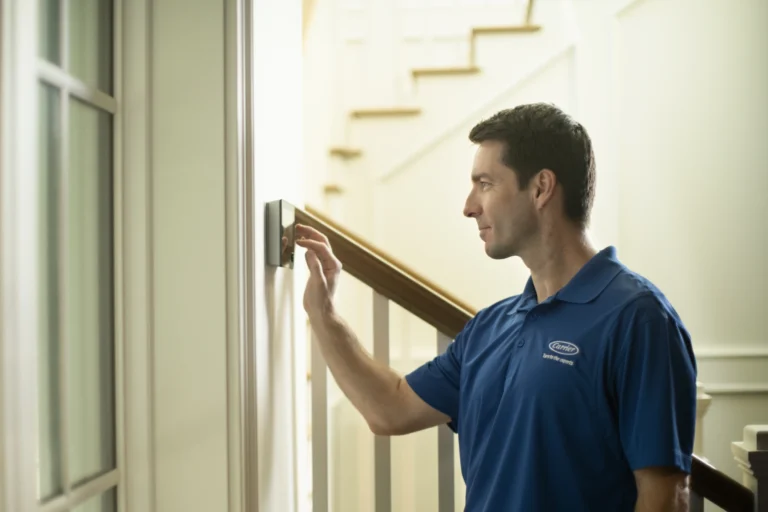
How Smart Home Technology Like Connected HVAC Systems Can Transform Comfort and Energy Savings for Texas Hill Country Homeowners
Imagine leaving your home in Canyon Lake on a warm Friday morning, driving to the coast for a weekend trip, and realizing somewhere near Seguin that you left the thermostat set at full cooling. In years past, that meant an air conditioner running hard against an empty house for two days straight. Today, you pull out your phone, tap an app, and raise the temperature a few degrees before you reach the highway. That single moment captures what connected HVAC technology brings to Hill Country living: control that follows you wherever you are.
At Relentless Heating and Cooling, we have watched smart home technology move from a novelty to a practical tool that genuinely lowers bills and improves daily comfort. As a local family-owned business with over 27 years of experience, we have installed, serviced, and tuned heating and cooling systems across this region long enough to know how demanding the climate can be. Connected equipment gives homeowners a way to work with that climate instead of fighting it.
What Makes an HVAC System “Smart”
A connected HVAC system is more than a programmable thermostat with a touchscreen. It is a network of sensors, controllers, and software that communicate with each other and with you. The core of most systems is a smart thermostat that learns your schedule, tracks indoor and outdoor conditions, and adjusts operation automatically. From there, the technology can expand to zoning dampers, remote diagnostics, humidity sensors, and air quality monitors that all share data.
The real advantage comes from how these components respond to the specific conditions in the Texas Hill Country. Our region sees wide daily temperature swings, high summer humidity, and sudden weather changes that older systems simply cannot anticipate. A smart system reads those shifts in real time and responds before your home ever feels uncomfortable. When we install connected equipment, we calibrate it to the realities of your house: its insulation, its window exposure, and the way heat builds through a long afternoon.
Energy Savings That Add Up Over a Texas Summer
Cooling costs dominate utility bills for most Hill Country homeowners, often from April through October. A connected system attacks those costs from several directions at once. Instead of running on a fixed schedule, it modulates output based on occupancy, time of day, and the heat load your home is actually experiencing. Over a full cooling season, those small, continuous adjustments translate into meaningful savings.
Here are several ways connected HVAC technology reduces energy waste in a typical home:
- Adaptive scheduling: The system learns when your household is active and scales cooling back during empty hours without you remembering to adjust anything.
- Geofencing: Using your phone’s location, the system eases off when the house is empty and ramps up as you head home, so you arrive to comfort without paying to cool an empty building all day.
- Zoned control: Paired with motorized dampers, a smart system conditions only the rooms being used, instead of treating the whole house as a single space.
- Energy reporting: Monthly usage breakdowns show exactly where your dollars go, letting you spot waste and make informed choices.
When we pair a high-efficiency system with connected controls, the two work together. A variable-speed unit running at a lower, steadier output uses far less electricity than a single-stage system cycling on and off. Smart controls keep that variable-speed equipment in its most efficient range for as many hours as possible.
Comfort That Responds to How You Actually Live
Energy savings get the headlines, but comfort is what homeowners notice every day. In a Hill Country home with tall ceilings, large windows, and rooms that face different directions, temperature can vary dramatically from one space to another. A connected system with multiple sensors measures those differences and balances them instead of relying on a single reading from a hallway.
Humidity control is another area where smart systems shine in our region. High moisture makes a 76-degree room feel warm and sticky. Connected equipment can run dehumidification cycles independently of cooling, pulling moisture out of the air even when the temperature does not call for much cooling. The result is a home that feels fresh and dry rather than clammy during our humid stretches.
Remote Diagnostics and Fewer Surprises
One of the most valuable features of connected HVAC technology is what it does behind the scenes. Many systems monitor their own performance and flag problems early. A drop in cooling efficiency, a clogging filter, or a component drawing abnormal power can trigger an alert before a full breakdown occurs. For us at Relentless Heating and Cooling, that data means we can arrive at a service call already knowing what to look for.
This proactive approach fits naturally with regular maintenance. When we service a connected system, we review its performance history, catch developing issues, and keep the equipment running at peak efficiency. Whether you own a single-family home, a mobile home, or a light commercial building, remote monitoring shortens repair times and reduces the chance of an unexpected failure during the hottest week of the year.
Putting Smart Technology to Work in Your Home
Every home is different, and connected technology works best when it is matched to your equipment and your habits. Our team evaluates your existing system, your ductwork, and your goals before recommending an approach. Sometimes that means adding a smart thermostat and zoning to a sound existing system. Other times it means pairing connected controls with new high-efficiency or mini-split equipment during a replacement.
If you are ready to see how smart home technology can lower your bills and raise your comfort, reach out to Relentless Heating and Cooling. We bring decades of local experience, honest guidance, and the hands-on skill to install and support connected systems built for the Texas Hill Country.